





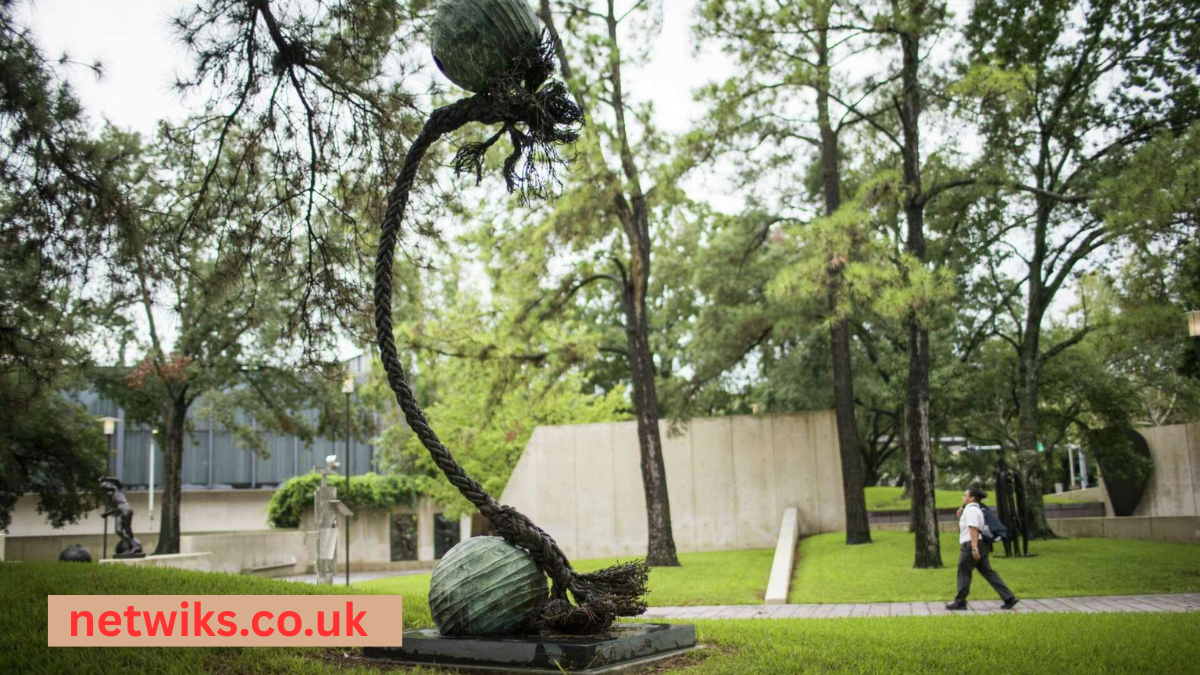
Cullen Sculpture Garden is one of Houston’s most captivating yet often understated cultural spaces, offering visitors a rare blend of contemporary sculpture, natural landscaping, and architectural harmony. Nestled within the city’s renowned Museum District, it serves as a peaceful outdoor extension of the Museum of Fine Arts, Houston. Unlike traditional indoor galleries, this garden invites visitors to experience art in the open air, where natural light, weather, and seasonal changes continuously reshape how each sculpture is perceived. This dynamic interaction between nature and art is what makes the space particularly unique and memorable for both casual visitors and dedicated art enthusiasts.
The garden is designed not just as an exhibition space but as an immersive cultural experience. Every sculpture is carefully placed to encourage contemplation, allowing visitors to walk freely among artworks without the constraints of walls or structured pathways. This openness creates a sense of discovery, where each turn reveals a new artistic perspective. The combination of greenery, modern design, and curated artworks transforms the garden into a living museum that evolves throughout the day and across seasons.
Beyond its aesthetic appeal, Cullen Sculpture Garden also plays an important educational and cultural role in Houston. It introduces visitors to modern and contemporary sculptural practices while making high-quality art accessible to the public. This democratization of art is central to its mission, ensuring that creativity is not confined to galleries but integrated into everyday urban life.
History and Background of Cullen Sculpture Garden
The origins of Cullen Sculpture Garden trace back to Houston’s growing commitment to public art and cultural development in the late 20th century. As the city expanded its Museum District, there was a strong desire to create a space where sculpture could be experienced in a more natural and engaging environment. The garden was conceived as part of this vision, supported by cultural leaders and philanthropists who believed in making art more accessible to the public. Over time, it became a key extension of the Museum of Fine Arts, Houston, reinforcing the institution’s role as a cultural anchor in the region.
The development of the garden reflects a thoughtful collaboration between artists, architects, and landscape designers. Rather than simply placing sculptures in an outdoor setting, the creators envisioned a cohesive environment where every element—from pathways to plant selection—would complement the artworks. This holistic approach ensured that the garden itself became an artwork, not just a display area. The result is a carefully curated environment that enhances the emotional and visual impact of each sculpture.
Over the years, the garden has evolved alongside Houston’s cultural landscape. New acquisitions and rotating installations have kept the space fresh and relevant, while maintaining its original design philosophy. This balance between continuity and innovation has helped the garden remain a significant cultural landmark, attracting both repeat visitors and newcomers eager to experience its evolving collection.
Location, Layout, and Design Features
The Cullen Sculpture Garden is strategically located within Houston’s Museum District, making it easily accessible to both locals and tourists exploring the city’s cultural corridor. Its proximity to other major institutions allows visitors to seamlessly incorporate it into a broader museum experience. Despite being situated in a bustling urban environment, the garden offers a surprisingly tranquil atmosphere, acting as a green oasis amid the city’s architectural density.
The layout of the garden reflects a modernist approach to spatial design, emphasizing openness, flow, and visual balance. Pathways are arranged to encourage slow, reflective movement, allowing visitors to engage with each sculpture from multiple angles. The integration of greenery, including carefully selected trees, shrubs, and ground cover, provides a natural contrast to the often industrial or abstract forms of the sculptures. This interplay between organic and geometric elements enhances the sensory experience of the space.
Lighting also plays a crucial role in the garden’s design. Natural sunlight changes the appearance of sculptures throughout the day, casting shifting shadows and highlighting different textures. At dusk, subtle artificial lighting ensures the artworks remain visible while preserving the garden’s calm ambiance. Accessibility has also been thoughtfully considered, with smooth walkways and open spaces that accommodate visitors of all mobility levels, ensuring inclusivity in the experience.
Major Sculptures and Artworks in the Garden
The artistic collection at Cullen Sculpture Garden features a diverse range of modern and contemporary sculptures, showcasing works from both internationally recognized and emerging artists. The selection emphasizes abstract and conceptual art, encouraging viewers to interpret each piece in their own way. Materials such as steel, bronze, stone, and mixed media are commonly used, creating a rich variety of textures and forms throughout the space.
Each sculpture is intentionally positioned to interact with its surroundings, whether framed by trees, reflected in water, or contrasted against open sky. This deliberate placement enhances the emotional resonance of the artworks, transforming them into focal points within a larger environmental composition. Visitors often find that the meaning of a sculpture shifts depending on their viewing angle, time of day, or even weather conditions.
The garden also periodically features rotating installations, ensuring that the experience remains dynamic and engaging for repeat visitors. These temporary exhibits introduce new artistic voices and experimental forms, keeping the collection relevant and evolving. Through this ever-changing display, the garden continues to foster dialogue between contemporary art and the public, reinforcing its role as a living cultural space.
Visitor Experience and Things to Do
Visiting Cullen Sculpture Garden is designed to be a slow and reflective experience rather than a rushed tour. Guests are encouraged to wander freely through the pathways, taking time to observe each sculpture from different perspectives. This unstructured approach allows for personal interpretation and discovery, making each visit unique. The garden’s open layout ensures that there is no single “correct” route, giving visitors complete freedom to explore at their own pace.
Photography is one of the most popular activities within the garden, as the interplay of light, shadow, and sculpture creates visually striking compositions. Early morning and late afternoon are particularly favored times for photography due to the softer lighting conditions. Beyond photography, the garden also serves as a quiet retreat for reading, sketching, or simply enjoying a moment of calm in the city.
The garden’s location within the Museum District makes it easy to combine with visits to nearby cultural institutions, cafés, and parks. This accessibility enhances its appeal as part of a larger cultural itinerary. Whether visiting alone, with family, or as part of a guided tour, the experience is designed to be enriching, relaxing, and intellectually stimulating.
Conclusion
Cullen Sculpture Garden stands as a remarkable example of how art, nature, and urban design can coexist in harmony. It transforms the traditional museum experience by removing walls and inviting the public into an open dialogue with contemporary sculpture. As both a cultural landmark and a peaceful retreat, it continues to enrich Houston’s artistic identity.
For visitors seeking a blend of creativity, reflection, and outdoor beauty, the garden offers an experience that is both visually inspiring and emotionally grounding. It remains a testament to the power of public art in shaping meaningful urban spaces.