





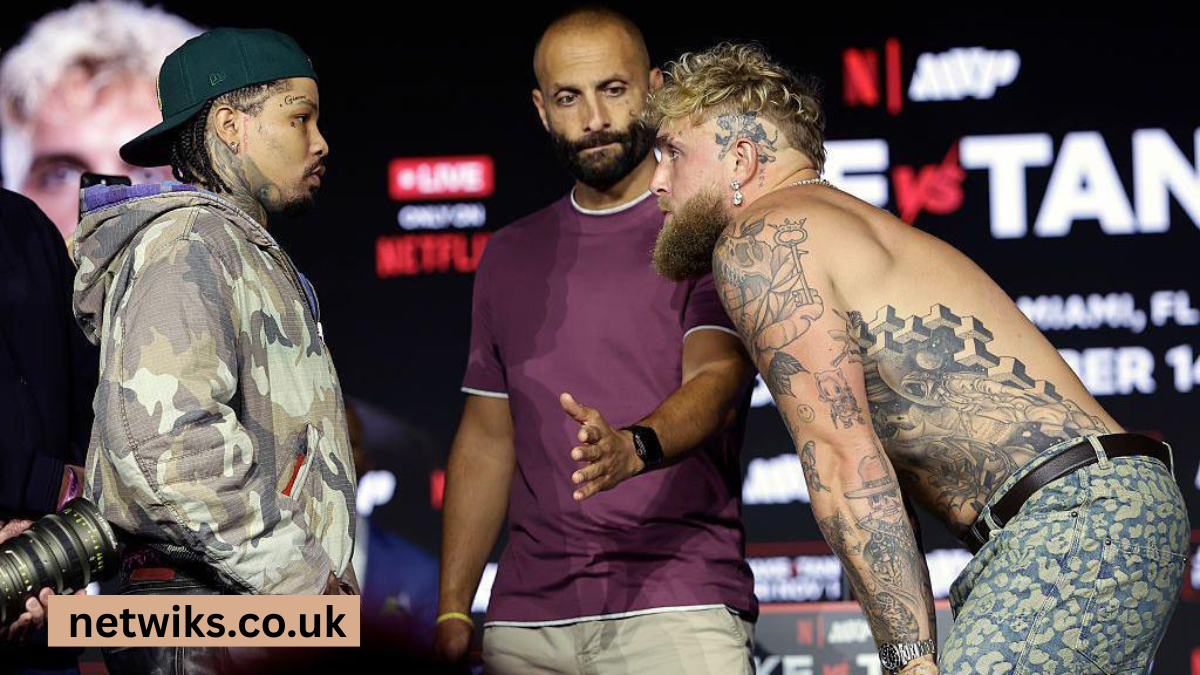
The potential matchup between Jake Paul and Gervonta Davis has become one of the most talked-about topics in modern boxing discussions. Whenever the phrase Jake Paul vs Tank appears online, it instantly sparks debate, curiosity, and controversy. This is not just another fight rumor; it represents the ongoing clash between entertainment boxing and elite professional boxing. Jake Paul, a social media star turned boxer, has built his career on massive publicity fights, while Tank Davis represents the highest level of technical boxing skill and knockout power in the lightweight division.
The fascination with Jake Paul vs Tank comes from the dramatic contrast between the two fighters. On one side, Jake Paul brings size, youth, and promotional power, turning every fight into a global entertainment event. On the other side, Gervonta “Tank” Davis stands as a proven world champion with devastating punching ability and years of elite competition experience. This extreme difference in background makes fans wonder whether the fight is even realistic or simply internet hype fueled by viral content.
Another reason the topic trends so heavily is the influence of social media and modern combat sports culture. In today’s world, boxing is no longer limited to rankings and titles—it is also driven by audience engagement, pay-per-view sales, and digital buzz. As a result, Jake Paul vs Tank continues to dominate conversations, even without official confirmation. The idea alone is enough to divide boxing fans, celebrities, and analysts across the globe.
Background of Both Fighters and Their Boxing Identity
Jake Paul’s rise in boxing is one of the most unusual transformations in sports entertainment history. Starting as a YouTube personality, he successfully transitioned into professional boxing through disciplined training, high-profile matches, and aggressive self-promotion. His fights have drawn millions of viewers, proving that he understands not only boxing fundamentals but also how to sell an event. Over time, he has improved his conditioning, timing, and power, which has allowed him to compete against former MMA fighters and other crossover athletes. However, critics argue that his opponents have not yet represented elite boxing levels, leaving questions about how he would perform against a world champion like Tank Davis.
On the other side of the Jake Paul vs Tank discussion stands Gervonta Davis, a highly skilled professional boxer known for explosive knockout power and elite-level ring intelligence. Tank Davis has built his reputation through years of competing at the highest levels of the sport, capturing world titles and defeating top-ranked opponents. His ability to close distance, counterpunch effectively, and finish fights with precision makes him one of the most dangerous fighters in boxing today. Unlike Jake Paul’s relatively short career, Davis has spent most of his life developing technical mastery inside the ring.
The experience gap between these two fighters is one of the most important aspects of the debate. While Jake Paul has physical advantages such as height and reach, Tank Davis possesses superior timing, defense, and fight IQ developed through championship-level competition. This contrast forms the foundation of every Jake Paul vs Tank discussion, as fans try to imagine whether raw size and power can overcome elite boxing experience.
Why Jake Paul vs Tank Became a Viral Boxing Topic
The rise of Jake Paul vs Tank as a viral topic is heavily tied to the influence of social media and modern sports entertainment. Jake Paul has mastered the art of callouts, often mentioning high-profile fighters to generate attention and engagement. Every time he mentions a big-name boxer, the internet reacts instantly, creating millions of impressions across platforms like YouTube, Instagram, and X (formerly Twitter). This constant cycle of callouts and reactions has helped keep his name relevant in boxing conversations, even when no official fight is scheduled.
Another major factor behind the hype is the ongoing popularity of crossover boxing events. Over the past few years, celebrity boxing has evolved from a novelty into a profitable industry. Events featuring Jake Paul have shown that audiences are willing to pay for entertainment-driven fights, even if they lack traditional championship stakes. This trend has blurred the line between professional boxing and entertainment spectacle, making matchups like Jake Paul vs Tank seem possible in the eyes of casual fans.
However, the reaction from the boxing community is far more divided. Some fans view the matchup as an exciting fantasy fight that could generate massive revenue, while purists consider it unrealistic and potentially unsafe due to the skill difference. Despite this disagreement, the buzz continues to grow because modern boxing thrives on controversy and speculation. As long as neither fighter completely shuts down the idea, the conversation around Jake Paul vs Tank will remain active in global sports media.
Fight Analysis: What Would Happen Inside the Ring
A technical breakdown of Jake Paul vs Tank reveals a significant contrast in fighting styles, physical attributes, and experience levels. Jake Paul typically fights as a larger, stronger boxer who uses his reach and size to control distance. His game plan often revolves around jab control, pressure, and maintaining a steady pace throughout the rounds. While he has shown improvement in defense and endurance, his experience against elite-level counterpunchers remains limited, which becomes a major concern in a matchup like this.
Tank Davis, on the other hand, is widely regarded for his explosive counterpunching ability and fight-ending power. His style is built around patience, timing, and sudden bursts of aggression that overwhelm opponents. Once he closes the distance, he becomes extremely dangerous due to his accuracy and ability to deliver fight-ending combinations. In a Jake Paul vs Tank scenario, this creates a high-risk environment for Jake Paul, especially in mid-range exchanges where Tank excels.
The strength comparison also highlights key vulnerabilities. Jake Paul’s size advantage could help him early in the fight if he manages distance effectively, but Tank Davis’s speed and precision are likely to test his defense under pressure. Meanwhile, Tank’s smaller frame could struggle initially with reach disadvantage, but his experience against world-class opponents gives him a tactical edge. Overall, the fight analysis suggests that Jake Paul vs Tank would not just be a physical battle, but a major test of timing, experience, and composure under elite pressure.
Conclusion: Reality vs Hype in Jake Paul vs Tank Debate
The ongoing discussion around Jake Paul vs Tank represents more than just a potential boxing match—it reflects the evolution of combat sports in the digital age. On one side, Jake Paul symbolizes the entertainment-driven future of boxing, where audience engagement and spectacle are just as important as athletic credentials. On the other side, Tank Davis represents traditional boxing excellence, built on discipline, championship experience, and proven dominance in the ring.
While the idea of Jake Paul vs Tank generates massive attention and financial speculation, the reality of the matchup remains uncertain. The skill gap, weight class differences, and professional boxing standards make it a complicated fight to organize. However, the conversation itself shows how modern boxing has changed, where hype can sometimes rival reality in importance. Whether or not the fight ever happens, it has already succeeded in capturing global interest and sparking debate across the sports world.
Ultimately, Jake Paul vs Tank is less about predicting a confirmed outcome and more about understanding the changing landscape of boxing. It highlights the clash between entertainment and elite sport, and why both continue to coexist in today’s combat sports industry.