





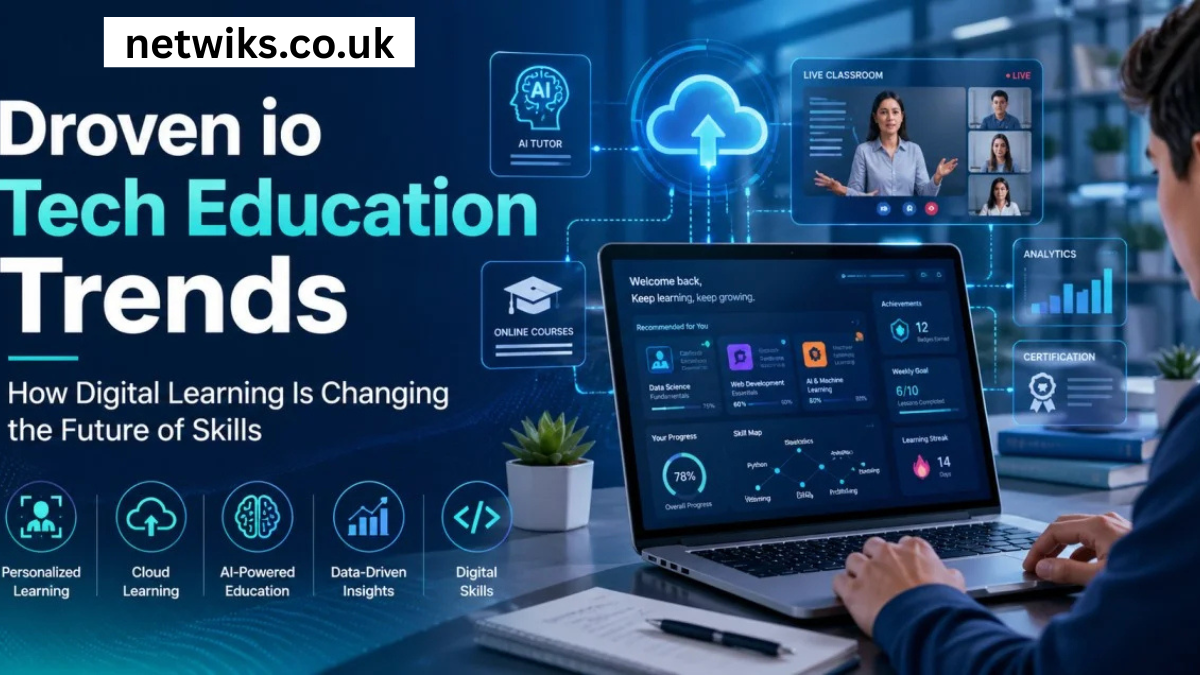
Droven IO tech education trends are becoming a major talking point in the global shift toward digital learning and innovation. As education systems continue to evolve, technology is no longer just a supporting tool—it has become the backbone of modern learning experiences. From smart classrooms to AI-driven tutoring systems, the transformation is reshaping how students learn, how teachers teach, and how institutions operate in a rapidly digitalizing world.
The rise of Droven IO tech education trends reflects a broader movement toward personalized, flexible, and data-driven education. Traditional learning models, which once relied heavily on physical classrooms and rigid curricula, are now being replaced with dynamic, interactive systems powered by artificial intelligence, cloud computing, and immersive technologies. This shift is not only improving accessibility but also enhancing engagement and learning outcomes across all levels of education.
Understanding these trends is essential for educators, students, and policymakers alike. As digital transformation accelerates, those who adapt quickly will benefit from improved skills, better opportunities, and more efficient learning environments. This article explores the evolution, key innovations, challenges, and future possibilities of Droven IO tech education trends in detail.
Evolution of Tech Education in the Droven IO Era
The evolution of Droven IO tech education trends marks a significant departure from traditional classroom-based learning. In the past, education was largely confined to physical spaces, textbooks, and teacher-led instruction. However, the integration of digital tools has completely redefined this structure, allowing learning to extend beyond geographical and institutional boundaries. Online platforms, virtual classrooms, and interactive software now form the foundation of modern education systems.
One of the most important developments in this evolution is the rise of cloud-based learning environments. These systems allow students to access educational resources anytime and anywhere, making education more flexible and inclusive. With the help of Droven IO tech education trends, institutions are able to deliver scalable learning experiences that cater to diverse student needs without being restricted by physical infrastructure.
Another key aspect of this evolution is the integration of artificial intelligence. AI-powered systems are now capable of analyzing student performance, identifying weaknesses, and offering personalized learning paths. This has transformed education from a one-size-fits-all model into a highly adaptive system that responds to individual learning styles and progress.
Key Droven IO Tech Education Trends
Artificial Intelligence in Learning
Artificial intelligence is at the heart of Droven IO tech education trends, revolutionizing how students interact with educational content. AI-powered tutoring systems can provide real-time assistance, answer questions, and even predict areas where a student may struggle. This level of personalization ensures that learners receive targeted support, improving both efficiency and outcomes.
In addition, automated grading systems reduce the workload for educators while maintaining consistency in assessment. AI also enables predictive analytics, allowing institutions to monitor student progress and intervene early when necessary. This creates a more proactive and supportive learning environment.
Virtual Reality and Augmented Reality Classrooms
Virtual Reality (VR) and Augmented Reality (AR) are transforming education into an immersive experience. Through Droven IO tech education trends, students can now explore virtual laboratories, historical sites, and scientific simulations without leaving the classroom. This hands-on approach enhances understanding and retention of complex concepts.
For subjects like medicine, engineering, and architecture, VR and AR provide realistic simulations that would otherwise be difficult or expensive to replicate. These technologies bridge the gap between theory and practice, making education more engaging and practical.
Gamification of Education
Gamification is another powerful trend within Droven IO tech education trends, turning learning into an interactive and rewarding experience. By incorporating game-like elements such as points, badges, and leaderboards, educators can significantly increase student motivation and participation.
This approach encourages healthy competition and continuous improvement. Students are more likely to stay engaged when learning feels like a challenge rather than a chore. Gamification also helps in tracking progress and reinforcing positive learning behaviors.
Cloud-Based and Remote Learning Platforms
Cloud-based learning platforms are essential to the expansion of Droven IO tech education trends. These systems allow students and teachers to collaborate in real time, share resources, and access learning materials from any device.
Remote learning has become especially important in recent years, enabling education to continue even during disruptions. This flexibility ensures that learning is not limited by location, making education more inclusive and resilient.
Data-Driven Education Systems
Data analytics plays a crucial role in modern education systems. Through Droven IO tech education trends, institutions can collect and analyze large volumes of student data to improve teaching methods and curriculum design.
This data-driven approach allows educators to identify patterns, measure performance, and make informed decisions. It also supports adaptive learning systems that adjust content based on student behavior and progress.
Impact of Droven IO Tech Education Trends on Students and Educators
The impact of Droven IO tech education trends on students is profound. Learning has become more personalized, flexible, and accessible than ever before. Students can now learn at their own pace, revisit lessons, and access a wide range of digital resources that enhance understanding. This flexibility is particularly beneficial for students in remote or underserved areas.
For educators, these trends have transformed their roles from traditional instructors to facilitators of learning. Teachers now use digital tools to guide, support, and monitor student progress more effectively. While this shift requires new skills and continuous training, it also opens up opportunities for more meaningful and impactful teaching.
However, this transformation is not without challenges. Many institutions struggle with adapting to new technologies due to limited resources or lack of training. Despite these challenges, the overall impact of Droven IO tech education trends remains overwhelmingly positive, driving innovation and improving educational outcomes worldwide.
Challenges in Implementing Tech Education Trends
Despite its benefits, the adoption of Droven IO tech education trends comes with several challenges. One of the most significant barriers is infrastructure. Many regions still lack the necessary digital infrastructure, such as stable internet connections and access to modern devices, which limits the reach of advanced educational technologies.
Cost is another major issue. Implementing AI systems, VR tools, and cloud platforms requires significant investment, which may not be feasible for all institutions. This creates a gap between well-funded and under-resourced educational systems.
Data privacy and cybersecurity concerns also play a critical role. As more student data is collected and stored digitally, ensuring its protection becomes increasingly important. Institutions must implement strong security measures to prevent data breaches and misuse.
Future of Droven IO Tech Education
The future of Droven IO tech education trends is both exciting and transformative. Artificial intelligence is expected to become even more advanced, enabling fully adaptive learning environments that respond instantly to student needs. This will create highly personalized educational experiences that maximize learning efficiency.
Emerging technologies such as blockchain may also play a role in securing academic records and certifications, ensuring transparency and authenticity. Meanwhile, the concept of metaverse-based education is gaining traction, offering fully immersive virtual classrooms where students can interact in real time.
As global collaboration increases, educational institutions will likely work together more closely, sharing resources and knowledge across borders. This interconnected future will make education more inclusive, innovative, and globally relevant.
Conclusion
Droven IO tech education trends are reshaping the future of learning by integrating advanced technologies into every aspect of education. From AI-driven personalization to immersive VR experiences, these innovations are making education more accessible, engaging, and effective.
While challenges such as infrastructure and cost remain, the overall direction is clear—education is becoming more digital, flexible, and data-driven. As these trends continue to evolve, they will play a crucial role in preparing students for a technology-driven future.
Ultimately, Droven IO tech education trends represent not just a shift in tools, but a complete transformation in how knowledge is delivered and experienced in the modern world.